Inside Salone del Mobile: How Furniture Buying Decisions Are Actually Made
Inside Salone del Mobile: How Furniture Buying Decisions Are Actually Made
Six days in April decide what appears in furniture showrooms around the world for the following two years. Salone del Mobile.Milano ran its 64th edition from 21 to 26 April 2026, drawing 316,342 visitors from 167 countries to see more than 1,900 exhibitors across over 169,000 square metres of sold-out exhibition space. Very little of the buying that happens there resembles retail.
What the fair is and what it is not
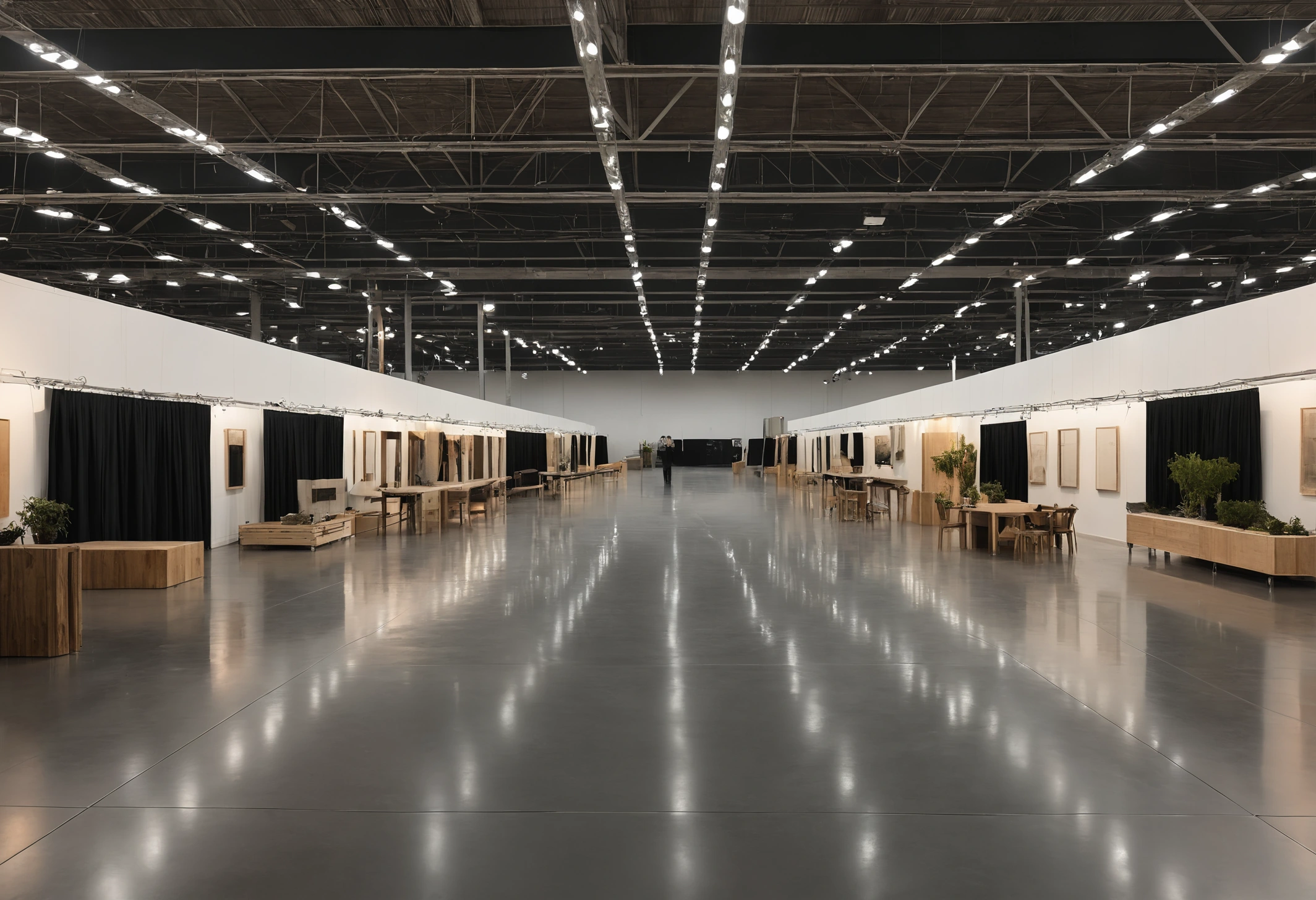
Salone del Mobile.Milano is a trade fair where manufacturers present collections to distributors, retailers, architects and specifiers. The 2026 edition opened to sector operators every day from 9.30 am to 6.30 pm, admitted students on 24, 25 and 26 April, and opened to the general public only on Saturday 25 and Sunday 26 April.
The public days matter commercially far less than the trade days. A visitor attending on the Saturday sees the collections. A distributor attending on the Tuesday negotiates territory, volume, payment terms and production slots, which are the decisions that determine what reaches any given market.
The four conversations that happen behind each stand
Every significant manufacturer stand contains a public display area and a private meeting area, and the private area is where the fair does its work. Four separate negotiations run in parallel across the six days.
| Conversation | Parties | What is decided |
|---|---|---|
| Territory and exclusivity | Manufacturer and distributor | Which company represents the brand in which market, and whether exclusively |
| Opening order and display commitment | Manufacturer and retailer | How much stock the retailer buys, and which pieces go on the showroom floor |
| Production slot allocation | Manufacturer and buyer | Where the buyer’s orders sit in the factory queue for the coming year |
| Project specification | Manufacturer and architect or designer | Custom sizes, finishes and contract pricing for named projects |
Production slot allocation is the conversation with the longest consequences. A distributor who commits early receives earlier slots, which means that distributor has stock while competitors quote lead times. Buyers who wonder why one showroom can deliver in three weeks and another quotes four months are usually seeing the result of a negotiation conducted at the fair a year earlier.
Why decisions get made in four days rather than four months
Fair-week decision speed is a function of physical presence rather than of impulse. A buyer at the fair can sit on twelve competing sofas within an hour, compare frame construction directly, meet the technical staff who will answer questions later, and see how a collection reads as a whole rather than as photographs.
- Direct comparison. Competing products from different manufacturers sit within walking distance, which no showroom or catalogue can reproduce.
- Technical access. Factory technical staff attend, so questions about load ratings, fabric performance and custom dimensions get answered by the people who will produce the piece.
- Complete collections. Manufacturers show the full range rather than the subset a local retailer stocks.
- Pricing in one place. Trade pricing across multiple brands becomes comparable within a single week rather than across months of separate meetings.
A buyer who visits the fair compares products in an afternoon that would take a year to see any other way. Speed of decision reflects density of information, not haste.

How a collection travels from Milan to a delivered room
A piece shown in Milan in April typically reaches a customer’s home 8 to 20 months later, and the delay is structural rather than administrative. Manufacturers finalise production tooling after gauging order interest, then run production against confirmed orders, then ship.
- April, fair week
- Collection presented. Distributors and retailers place opening orders and negotiate slots.
- May to August
- Manufacturer confirms which prototypes enter production, finalises tooling and fabric ranges, and issues final pricing.
- September to December
- First production runs. Display pieces ship to retailers ahead of customer orders.
- Following year
- Pieces appear on showroom floors and become available for customer purchase, with production orders running 12 to 20 weeks from confirmation.
Buyers occasionally see a piece in fair coverage and expect immediate availability. The realistic expectation is that a collection photographed in April becomes buyable locally around the following spring, and that early availability depends entirely on whether a local distributor committed to stock during fair week.
What visiting designers actually collect at the fair
Designers attending the fair collect three things that affect projects months later: physical samples, technical data, and relationships with factory staff. None of the three is available remotely at the same quality.
Physical samples matter most for materials that photograph poorly. Boucle weaves, brushed metals, honed stones and matte lacquers all read differently in person, and a designer specifying from a screen makes errors that a sample library prevents. Studios delivering interior design projects in Dubai that maintain current sample libraries are usually maintaining them through direct fair attendance rather than through post.

How to read fair coverage without being misled
Published fair coverage emphasises novelty because novelty is what makes a story. Commercial reality emphasises continuation, since the majority of manufacturer revenue comes from established pieces that were not launched this year and will not be reported.
- A launched piece is a prototype until production is confirmed. Some pieces shown never enter production because order interest was insufficient.
- Prices shown at the fair are trade prices. Retail pricing in any market adds freight, duty, warehousing and dealer margin.
- Availability depends on local commitment. A piece can be in full production in Italy and unavailable in a given country for a year.
- Custom dimensions are frequently possible and rarely advertised. Manufacturers routinely produce non-standard sizes for contract projects.
The last point is the most useful for a private client. A sofa that appears 40 mm too deep for a room can often be produced at the required depth, because the factory already builds custom sizes for hotel and contract work. Asking the question costs nothing, and a showroom holding a live account with the factory can put the request through. Buyers working with dealers who stock Italian designer furniture should raise dimensional constraints before selecting rather than after, since a custom run occupies a different production slot.
The fair’s role in the wider design calendar
Salone del Mobile.Milano anchors a broader week of exhibitions and installations across Milan, and the combination functions as the industry’s annual reset. Historical background on the fair’s development is documented at Salone del Mobile, which traces its growth from a national furniture showcase into an international trade event.
For anyone furnishing a property, the practical takeaway from the fair calendar is timing. Collections become locally available in the spring following their presentation, showroom stock rotates around the same cycle, and previous-season display pieces frequently become available at reduced prices when new stock arrives.
What a private buyer should take from all of this
Three practical conclusions follow. Ask when a piece was launched, because a piece launched this April will not be delivered quickly. Ask whether the dealer committed to stock, because that answer explains the lead time better than any other. Ask whether custom dimensions are available, because the factory almost certainly makes them for someone else already.
None of the three questions requires attending the fair. All three require a dealer with a direct factory relationship, which is what the fair exists to create.